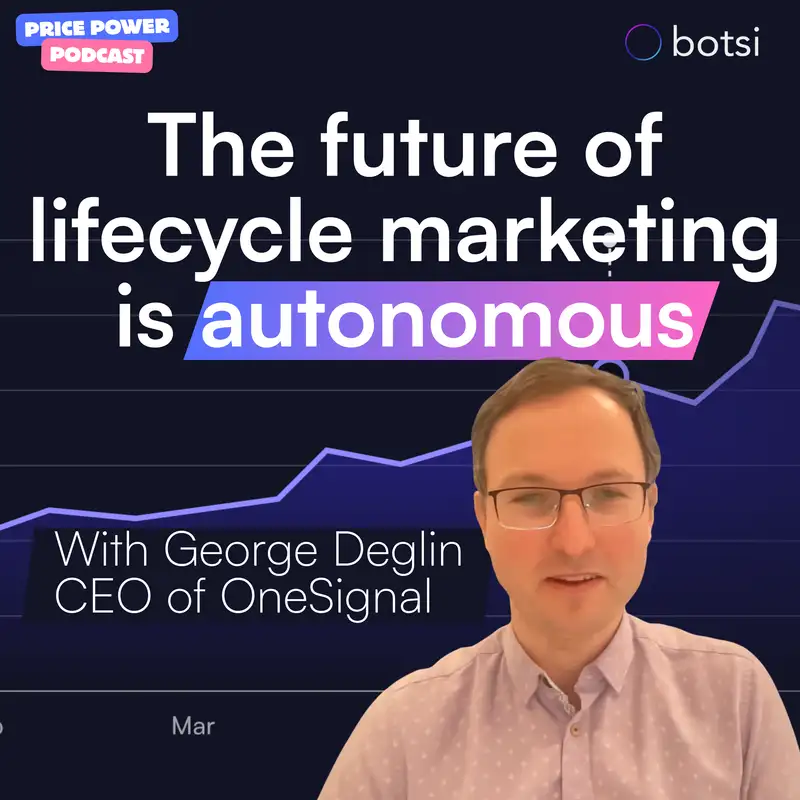
George Deglin, CEO and co-founder of OneSignal, explains why calendar-based lifecycle marketing holds subscription apps back, why SaaS dashboards are losing their place as the primary interface, and what autonomous lifecycle marketing looks like in practice.
George walks through OneSignal's autonomy ladder, from L0 (a traditional SaaS dashboard) to L4 (a self-improving agent). He explains how each level builds customer trust, why behavioral triggers outperform scheduled messages, why email remains overlooked by consumer apps, and why companies worried about token costs should build features that cost more—not less.
What you'll learn:
• Why lifecycle messaging should respond to product behavior instead of a marketing calendar
• Why behavioral triggers outperform scheduled sends by 4x to 9x
• How product and lifecycle-team silos weaken message quality
• Why email is an underused, inexpensive retention and win-back channel
• What George means when he says "dashboards are dying"
• What happened when OneSignal asked 20 customers whether they preferred its dashboard or Claude, Gemini, or ChatGPT
How the L0-to-L4 autonomy ladder moves from assistance to recommendations and independent execution
• Why most companies pursuing ML personalization are optimizing the final 5% before mastering the basics
• Whether AI could mean fewer lifecycle-marketing hires
• How AI inbox filtering will raise the bar for message relevance
• Where app-to-web billing and RCS payment flows could go next
• Why OneSignal won't charge separately for AI—and why George favors expensive AI use cases today
Key takeaways:
• Calendar sends are the default—and the problem. Moving from scheduled messages to behavioral triggers is a larger opportunity than adding AI-generated personalization to a weak foundation.
• Email is inexpensive and still reaches users after they uninstall. The main obstacle is organizational coordination, not technology.
• Dashboards may fade, but product intelligence remains valuable. Users will increasingly operate software through agents while vendors expose more configuration through APIs.
• The autonomy ladder is also a trust ladder: assistance, proactive recommendations, delegated execution, and finally guarded autonomy that knows when to ask for help.
• Complex personalization can move a mature program from 95% to 100%, but many teams are overlooking the fundamentals.
• AI may eliminate tedious lifecycle work and reduce some hiring, while also making effective lifecycle marketing affordable for more companies.
• Today's expensive AI capability may become inexpensive as model costs fall, so George argues for building ahead of the cost curve.
Links & resources
• OneSignal: https://onesignal.com
• George Deglin on LinkedIn: https://linkedin.com/in/gdeglin
• George's essay on autonomous lifecycle marketing: https://onesignal.com/blog/the-future-of-lifecycle-marketing-is-autonomous/
Chapters
00:00 Cold open and episode introduction
01:00 What separates apps that win at lifecycle marketing
02:25 The most underused channel in consumer apps
03:15 Why teams default to paid media over email
04:30 Lifecycle marketing as an extension of the product
05:35 Retention, LTV, and who owns it
06:55 Change, provocative claims, and pushback
07:55 "Dashboards are dying"
08:05 Where the idea started with browser and computer use tools
10:10 Asking 20 customers: dashboard or agent?
11:15 Does every tool become a transactional layer?
12:40 Headless software and configuration APIs
14:50 The visual feedback loop problem
16:40 Previewing an email campaign inside Claude
18:05 The autonomy ladder, L0 to L4
20:00 Moving from assistance to recommendations
23:50 What customers are doing with L1
25:00 Saving customers hours on reports
26:00 L2: the recommendation engine
27:30 Democratizing customer engagement
28:40 Will competitors learn from my data?
30:30 AI and one to one personalization
32:20 Why triggered messages perform 4x to 9x better
34:15 Personalization versus segmentation
35:00 The 95% to 100% problem
36:25 Will AI replace marketers?
40:05 Why cheaper lifecycle marketing creates more companies
41:25 Does easier sending lower quality?
43:00 AI filtering on the receiving end
44:50 Pricing, packaging, and subscriptions
46:20 App to web billing
49:10 RCS payments inside the conversation
51:30 Token costs and why OneSignal won't charge for AI
54:30 Wrap
George walks through OneSignal's autonomy ladder, from L0 (a traditional SaaS dashboard) to L4 (a self-improving agent). He explains how each level builds customer trust, why behavioral triggers outperform scheduled messages, why email remains overlooked by consumer apps, and why companies worried about token costs should build features that cost more—not less.
What you'll learn:
• Why lifecycle messaging should respond to product behavior instead of a marketing calendar
• Why behavioral triggers outperform scheduled sends by 4x to 9x
• How product and lifecycle-team silos weaken message quality
• Why email is an underused, inexpensive retention and win-back channel
• What George means when he says "dashboards are dying"
• What happened when OneSignal asked 20 customers whether they preferred its dashboard or Claude, Gemini, or ChatGPT
How the L0-to-L4 autonomy ladder moves from assistance to recommendations and independent execution
• Why most companies pursuing ML personalization are optimizing the final 5% before mastering the basics
• Whether AI could mean fewer lifecycle-marketing hires
• How AI inbox filtering will raise the bar for message relevance
• Where app-to-web billing and RCS payment flows could go next
• Why OneSignal won't charge separately for AI—and why George favors expensive AI use cases today
Key takeaways:
• Calendar sends are the default—and the problem. Moving from scheduled messages to behavioral triggers is a larger opportunity than adding AI-generated personalization to a weak foundation.
• Email is inexpensive and still reaches users after they uninstall. The main obstacle is organizational coordination, not technology.
• Dashboards may fade, but product intelligence remains valuable. Users will increasingly operate software through agents while vendors expose more configuration through APIs.
• The autonomy ladder is also a trust ladder: assistance, proactive recommendations, delegated execution, and finally guarded autonomy that knows when to ask for help.
• Complex personalization can move a mature program from 95% to 100%, but many teams are overlooking the fundamentals.
• AI may eliminate tedious lifecycle work and reduce some hiring, while also making effective lifecycle marketing affordable for more companies.
• Today's expensive AI capability may become inexpensive as model costs fall, so George argues for building ahead of the cost curve.
Links & resources
• OneSignal: https://onesignal.com
• George Deglin on LinkedIn: https://linkedin.com/in/gdeglin
• George's essay on autonomous lifecycle marketing: https://onesignal.com/blog/the-future-of-lifecycle-marketing-is-autonomous/
Chapters
00:00 Cold open and episode introduction
01:00 What separates apps that win at lifecycle marketing
02:25 The most underused channel in consumer apps
03:15 Why teams default to paid media over email
04:30 Lifecycle marketing as an extension of the product
05:35 Retention, LTV, and who owns it
06:55 Change, provocative claims, and pushback
07:55 "Dashboards are dying"
08:05 Where the idea started with browser and computer use tools
10:10 Asking 20 customers: dashboard or agent?
11:15 Does every tool become a transactional layer?
12:40 Headless software and configuration APIs
14:50 The visual feedback loop problem
16:40 Previewing an email campaign inside Claude
18:05 The autonomy ladder, L0 to L4
20:00 Moving from assistance to recommendations
23:50 What customers are doing with L1
25:00 Saving customers hours on reports
26:00 L2: the recommendation engine
27:30 Democratizing customer engagement
28:40 Will competitors learn from my data?
30:30 AI and one to one personalization
32:20 Why triggered messages perform 4x to 9x better
34:15 Personalization versus segmentation
35:00 The 95% to 100% problem
36:25 Will AI replace marketers?
40:05 Why cheaper lifecycle marketing creates more companies
41:25 Does easier sending lower quality?
43:00 AI filtering on the receiving end
44:50 Pricing, packaging, and subscriptions
46:20 App to web billing
49:10 RCS payments inside the conversation
51:30 Token costs and why OneSignal won't charge for AI
54:30 Wrap