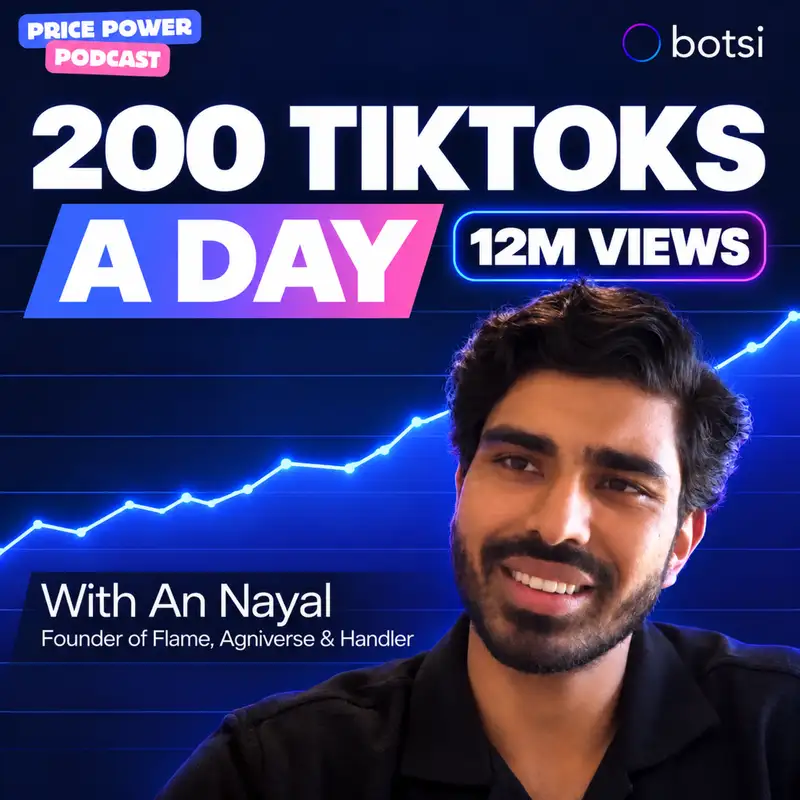
We talk with An Nayal, founder of Flamme, and now Agniverse, a UGC creator agency. An grew Flamme with 200 tiktoks a day, leading to over 50M views, and 200k+ downloads!
But still, he started with poor retention, didn't have monetization early on, and made tons of mistakes along the way. And that's mostly what we talk about! Wins are nice, but our mistakes are what we learn the most from.
Timestamps
00:00 Cold open
00:12 Intro
02:22 Launching Sparks and getting into TechCrunch Disrupt
03:27 The trademark notice that forced a rename
04:27 Zero retention and talking to dozens of couples
05:11 ChatGPT launches and Flame becomes an AI couples coach
06:32 Early traction: throwing everything at the wall
08:26 Why manual user outreach still matters
10:00 Second TechCrunch feature, still 4.2% day-30 retention
10:59 Finding the daily question in Mixpanel
12:06 Partner triggers and the carrot-and-stick system
13:34 Adding monetization after launching free
14:53 Charging per couple vs. per person
15:45 How Flame measured retention
16:44 Pricing by Twitter FOMO and competitor research
18:12 The trap of small-sample A/B tests
19:13 Three distribution phases: PR, paid, creators
20:44 The RAG fundraising mistake
21:37 Going all in on TikTok with a dozen iPhone 8s
23:01 Why organic is a fair testing ground
24:06 50M views, 200K installs, and why memes don't convert
24:50 Structuring UGC creative that converts
26:32 Referral programs and the K-factor ceiling
30:43 Why An decided to sell Flame
31:34 Six months of rejections from dating and mental health players
33:00 The LinkedIn message that led to an offer
34:36 Inside the performance-based deal structure
35:53 Founder burnout
36:43 The two walls: building and distribution
38:22 Adniverse: creators vs. influencers
39:11 Handler: engineering virality with AI
41:15 Consistency and loving the process
What you'll learn:
• Why press gets you a launch spike but never a growth channel
• How to find the one feature your retained users come back for
• How a partner-triggered "carrot and stick" loop lifted day-30 retention to 50%+
• Why charging for features that used to be free backfires, and what to paywall instead
• Why Flame charged per couple instead of per person
• Why small apps should fix distribution before running pricing experiments
• Why memes convert at 0.05–0.1% while product-focused videos hit 0.5–1%
• Why K-factor is capped in a two-person product
• How a "no ask here" LinkedIn message turned into an acquisition offer
• The difference between creators and influencers in a UGC strategy
Key Takeaways:
• Follow the retained users, not the roadmap. The AI coach got the press, but retained users came back for the daily question. Flame stopped building new features and A/B tested that one until it was ten times better.
• In a multiplayer app, users re-engage each other. A morning nudge ("extend your streak") and an evening warning ("you'll break their heart") turned partner activity into the retention engine.
• Paywall new value, not existing features. Flame kept the free product free and put newly requested features behind the paywall.
• Charge the household. One partner usually drives the purchase, and if either partner stops using a two-person product, both churn.
• Not all views are equal. Flame's first 20 to 30 million views came from memes that barely converted. Videos showing the product solving a real problem converted 5 to 10 times better.
• Cash incentives produce low-intent referrals. Nobody tells a friend about an app to earn five dollars. Ask for the referral at the aha moment.
Links & Resources
Agniverse: https://agniverse.co/
Handler: https://gethandler.ai/
An Nayal's website: https://annayal.com/
An Nayal on X: https://x.com/consumerxai
An Nayal on LinkedIn: linkedin.com/in/annayal